TL;DR:
- Effective script editing requires prioritizing structural issues over surface-level polish.
- Using structured triage and questionnaires guides precise, actionable revisions.
- Professional etiquette and AI tools complement review processes and protect industry relationships.
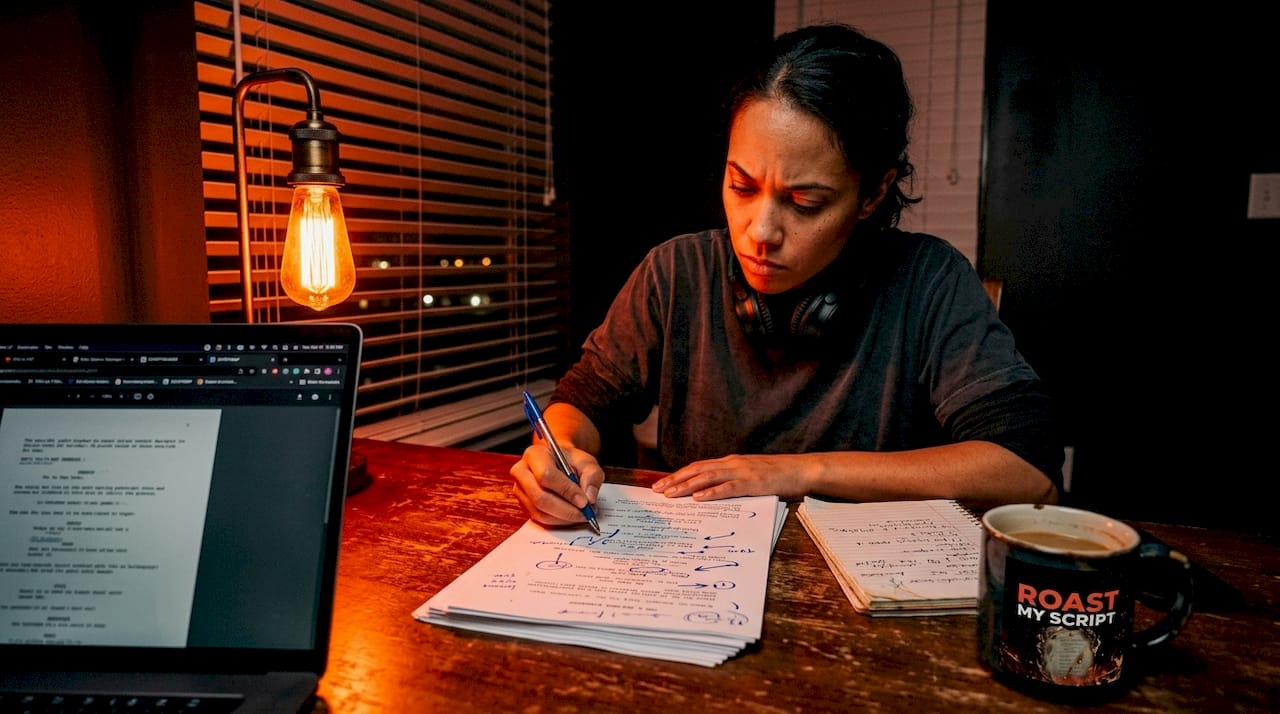
Submitting a screenplay before it's truly ready is one of the most common and costly mistakes a writer can make. A script that lands on a producer's desk with structural gaps, underdeveloped characters, or sloppy dialogue doesn't get a second chance. The difference between a pass and a consider often comes down to one thing: disciplined, structured editing before you send anything out. This article walks you through proven strategies, including triage feedback systems, guided questionnaires, collaboration etiquette, and affordable digital tools, so you can edit smarter, not just harder.
Table of Contents
- Evaluate your script with triage feedback
- Leverage structured questionnaires for actionable editing
- Master script etiquette in collaborative editing
- Compare script editing strategies and tools
- Why most script editing advice misses the mark
- Get expert feedback and affordable script analysis
- Frequently asked questions
Key Takeaways
| Point | Details |
|---|---|
| Use triage feedback | Organize and prioritize script edits for maximum impact. |
| Leverage guided questionnaires | Employ strategic checklists to target and fix story weaknesses. |
| Follow script etiquette | Maintain professionalism and respect in collaborative editing. |
| Compare editing tools | Evaluate strategies and digital solutions for affordable improvements. |
| Structured beats general advice | Framework-driven edits outperform vague rewrite suggestions. |
Evaluate your script with triage feedback
The first step to editing any script effectively is knowing what order to fix things in. Most writers jump straight into polishing dialogue or trimming scenes, when the real problems are structural. That's like painting a house with a cracked foundation. A triage feedback system solves this by sorting issues into three priority levels so you tackle the right problems first.
Here's how the system breaks down, based on constructive feedback methodology:
- Code Red (structure): These are the non-negotiable problems. A broken three-act structure, a protagonist without a clear arc, a muddy premise, or a missing midpoint. Code Red issues must be resolved before anything else. If your story doesn't work on a structural level, scene-level fixes are wasted effort. Check your story structure breakdown to confirm your script's skeleton is solid before moving forward.
- Code Yellow (scenes): Once the big picture holds, you move to scene-level problems. Are individual scenes doing double duty, advancing plot and revealing character? Do scenes start too early or end too late? Are there scenes that exist only for exposition? Yellow issues can significantly weaken a script even when the structure is sound.
- Code Green (polish): This is where you refine dialogue, fix formatting, tighten action lines, and cut redundant description. Green issues are cosmetic. Important, yes, but only valuable once Red and Yellow are clean.
Using guided questionnaires alongside triage dramatically improves results. Instead of vague notes like "this scene doesn't work," you ask specific questions: Does this scene change the character's situation? What is the character's goal entering this scene? What obstacle do they face? What's the outcome? Specific questions generate specific, actionable answers.
One often-overlooked practice is keeping a scrap file. Every scene, line of dialog, or exchange you cut goes into a separate document rather than deleted permanently. Screenwriters frequently find that a cut line fits perfectly three drafts later, or that a deleted subplot reveals a theme worth restoring. The scrap file costs nothing and saves a significant amount of time.
Pro Tip: "Kill your darlings" isn't just a writing cliche. It's a practical instruction. If a scene, character, or line of dialog makes you too proud to cut it objectively, that attachment is exactly why it probably needs to go. Clarity always beats cleverness.
Leverage structured questionnaires for actionable editing
With triage feedback identifying your major structural issues, the next step is using guided questionnaires to make your revisions precise rather than reactive. A lot of writers revise by feel, rereading the script and making changes that "feel right." That approach is unreliable and inconsistent across drafts.
Guided questionnaires for actionable notes force you to interrogate your script systematically. Here's a practical numbered process for implementing them:
- Story questionnaire: Ask whether your premise is clear in the first ten pages, whether the central conflict is established by the end of act one, and whether your protagonist has a specific and measurable goal. These questions surface structural gaps you might otherwise rationalize away.
- Character questionnaire: Ask whether each major character has a distinct voice, a clear want, and a deeper need that conflicts with that want. Ask whether the antagonist has a logical and motivated worldview. Character inconsistencies are among the most frequent notes producers give on submitted scripts.
- Theme questionnaire: Ask what question your story is asking and whether the ending answers it. Ask whether the theme emerges from action and consequence or is stated directly in dialog. Themes told are weak. Themes shown are powerful.
- Scene-by-scene questionnaire: For every scene, ask whether it's necessary, whether it could be combined with another, and what would be lost if it were cut entirely. If the honest answer is "not much," that's a Yellow or Red flag.
- Dialog questionnaire: Ask whether every character's dialog is distinguishable without a name header, whether any lines exist only to provide information to the audience, and whether subtext is present in key emotional exchanges.
The real value of this approach comes from patterns. When you analyze a script for improvement, patterns in your notes reveal persistent problems. If three different characters all lack a clear goal in their scenes, that's not a coincidence. It points to a deeper craft issue you need to address systematically, not scene by scene.
Understanding the script development process also helps you situate these questionnaires within a broader workflow. Questionnaires aren't a one-time tool. They're most effective when used as a checklist before every significant draft, not just the final pass.
Pro Tip: Print your questionnaire responses and compare them across drafts. If the same problem keeps appearing in different language, you haven't actually solved it. You've described it differently. Honest tracking is the difference between revision and revision theater.
Master script etiquette in collaborative editing
Script editing rarely happens in isolation. Whether you're working with a writing partner, receiving notes from a development executive, taking over a rewrite assignment, or participating in a workshop, how you conduct yourself professionally shapes your reputation just as much as the quality of your work.
Here are the core professional conduct principles every screenwriter should internalize:
- Be gracious if you're replaced. The entertainment industry is small. How you respond when you're taken off a project matters for every future job. This means no public complaints, no burning bridges, and no disparaging the script or the production publicly.
- Contact the previous writer before you start. This is considered standard professional courtesy, and the WGA Screenwriters Handbook is direct: be gracious if removed, contact the previous writer, and treat others the way you'd want to be treated in that situation.
- Respect the original voice. Unless you're doing a page-one rewrite, your job is to serve the story, not rewrite the entire script in your own voice. Producers hire you to fix specific problems, not to claim authorship over someone else's creative foundation.
- Maintain relationships with previous writers. Today's rival collaborator is tomorrow's referral. Writers who maintain respectful relationships in the industry consistently report more opportunities than those who don't.
- Separate ego from craft in the room. When receiving notes, your instinct to defend every choice is natural. But notes sessions are most productive when you listen, ask clarifying questions, and evaluate honestly before responding.
"Maintain professionalism at every stage of collaboration, because your reputation in this industry travels faster than your scripts."
Understanding what script coverage really means helps you contextualize the notes you receive, whether from a collaborator or a coverage reader. Coverage isn't a personal verdict. It's a professional assessment. Treating it that way makes the feedback easier to use and harder to take personally.

Compare script editing strategies and tools
After working through triage, questionnaires, and collaboration etiquette, it's worth stepping back to see how these strategies compare and which digital tools can support each one. Patterns in notes indicate facts, and the most effective editing systems are those that make those patterns visible quickly.
Here's a direct comparison of the three core editing strategies alongside their associated tools:
| Strategy | Primary benefit | Main challenge | Estimated cost |
|---|---|---|---|
| Triage feedback | Prioritizes fixes by impact | Requires honest self-assessment | Free (DIY) |
| Guided questionnaires | Creates precise, actionable notes | Time-intensive per draft | Free to $25 with tools |
| Professional etiquette | Protects career relationships | Emotionally difficult to practice | Free (mindset shift) |
| AI-based script coverage | Fast, objective structural analysis | No emotional nuance | $9 to $25 per script |
| Human script coverage | Deep narrative insight | Slow turnaround, high cost | $60 to $400 per script |
| Script doctor | Full rewrite support | Very high cost barrier | $500 to $1,500 and up |
The key takeaway from this comparison is that no single strategy is complete on its own. Triage without questionnaires leaves you knowing what is broken without knowing why. Questionnaires without triage lead to fixing polish before structure. And both are undermined without professional etiquette when collaboration is involved.
Affordable digital tools now make it possible to combine several of these approaches at low cost. AI-based script analysis techniques can surface structural and character-level issues within hours, giving you a detailed structural map before you invest in expensive human coverage. Understanding how format affects pitch success also matters here. A script with structural problems and poor formatting sends two negative signals simultaneously, both fixable before submission.
- Combine triage with AI coverage for a fast first-pass audit
- Use questionnaires to respond specifically to the problems AI coverage surfaces
- Apply etiquette principles any time you share your work or receive notes
Why most script editing advice misses the mark
Here's the uncomfortable truth: most script editing advice you'll find online or in screenwriting books is too general to be useful. It tells you to "strengthen your protagonist" or "raise the stakes" without giving you a concrete method to evaluate whether you've actually done it.
General rewrite instructions feel productive. They aren't. You can spend three drafts "raising the stakes" and still have a structurally broken script because no one told you to audit your midpoint for a genuine reversal, or check whether your protagonist is actually driving the story versus reacting to it.
The advice in most popular screenwriting books focuses on describing what a great script looks like rather than how to diagnose why your specific script isn't working yet. That's a significant gap. You don't need a description of a great three-act structure. You need a system that tells you which act of your particular script is broken and precisely why.
Structured frameworks like triage and guided questionnaires work because they force specificity. They replace "this doesn't work" with "scene 34 has no clear protagonist goal, the scene outcome changes nothing, and it can be cut or merged with scene 35." That's a note you can actually act on.
The other problem with conventional editing advice is that it treats all feedback as equal. A peer reader's gut reaction and a structured coverage report based on Hollywood methodology are not the same thing. Knowing how to weight feedback, and how to separate subjective preference from objective structural assessment, is a skill most writers never develop intentionally.
Here's what I tell screenwriters: use AI scriptwriting insights not as a replacement for craft judgment, but as a calibration tool. Objective analysis of your structure, character arcs, and pacing gives you data. Your judgment as a writer tells you what to do with that data. Both are necessary.
Get expert feedback and affordable script analysis
If you're ready to stop guessing and start editing with precision, Roast My Script was built for exactly this stage of the process.
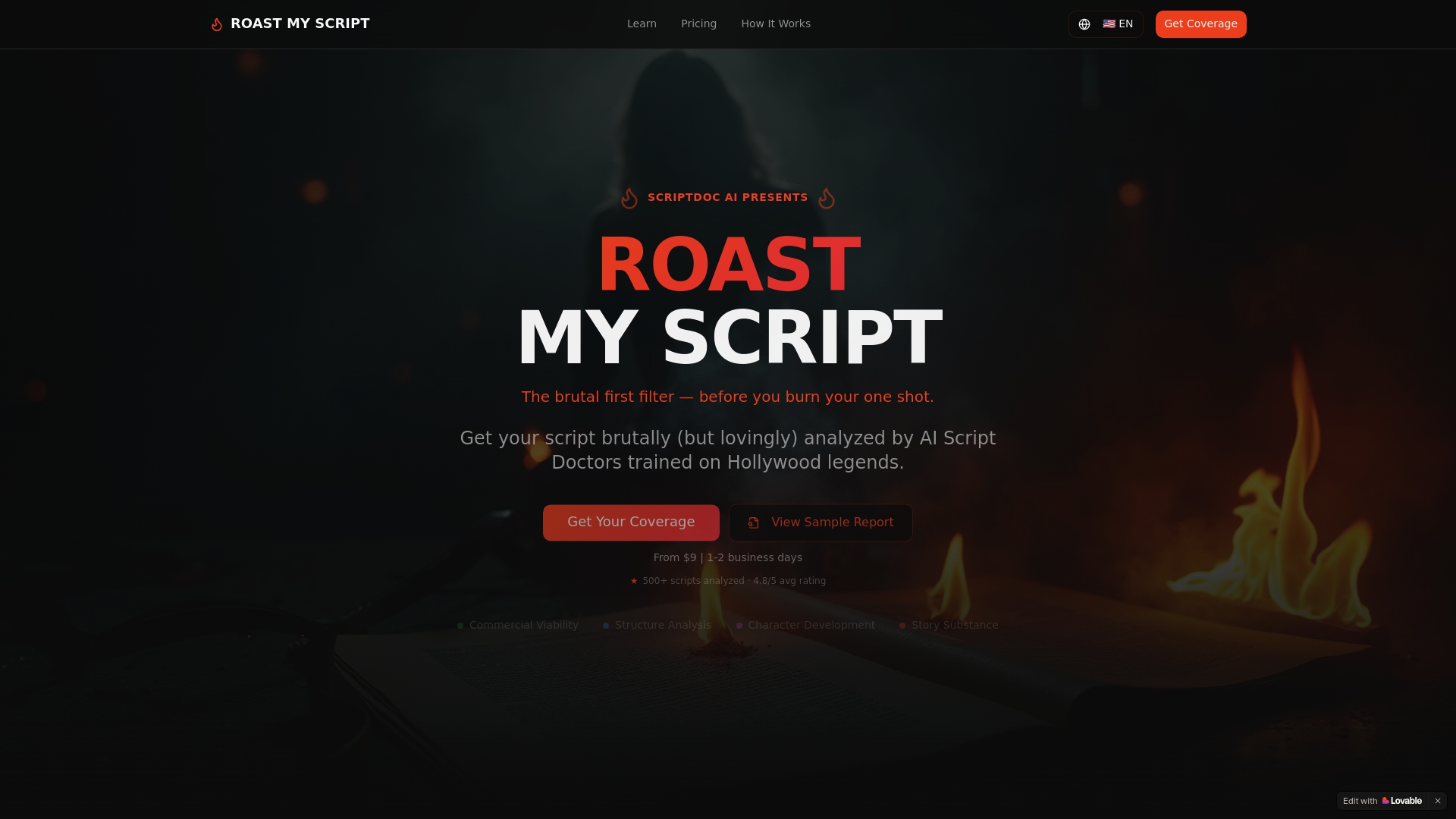
You upload your script, pay between $9 and $25, and receive a detailed structural analysis PDF within 1-2 days by email. The analysis is built on established Hollywood methodology, including frameworks from Syd Field, Robert McKee, and Blake Snyder's Save the Cat, and delivered through Claude Opus. It functions as the brutal first filter before you invest in expensive human coverage or professional script doctors. To go even deeper on your craft before you upload, our essential screenwriting concepts resource library gives you the foundational knowledge to understand every note you receive and act on it effectively.
Frequently asked questions
How does triage feedback improve my script edits?
Triage feedback organizes issues by priority level, specifically Code Red for structure, Code Yellow for scenes, and Code Green for polish, so you address the most critical structural flaws before spending time on surface-level refinements.
What is a guided script questionnaire?
A guided questionnaire is a structured checklist targeting key story elements like character goals, scene necessity, and thematic coherence, giving you actionable notes for revisions instead of vague impressions that are difficult to act on.
How should screenwriters handle collaborative script edits?
Screenwriters should follow WGA collaboration etiquette, which includes being gracious if removed from a project, contacting previous writers before starting a rewrite, and respecting the original script's voice unless a page-one rewrite is specifically requested.
Can AI tools help with affordable script editing?
Yes. AI script analysis tools provide fast, objective structural coverage at a fraction of the cost of traditional human readers, making professional-grade feedback accessible to writers at any budget level.
Recommended
- Script Development Process: Preparing for Hollywood Success | ROAST MY SCRIPT
- How to analyze a script for powerful screenplay improvement | ROAST MY SCRIPT
- Script format impact: 90% boost production & pitch success | ROAST MY SCRIPT
- Master Story Structure Breakdown for Screenwriters | ROAST MY SCRIPT
- The essential parts of a screenplay pros use to get noticed