
Choosing the right plot structure can make or break your screenplay's chances in the competitive world of pitching and production. Many screenwriters struggle to match their story's unique needs with the dozens of structural frameworks available, from classic three acts to complex non-linear designs. This article delivers proven plot structure examples with clear guidance on when and how to apply each one, helping you craft a screenplay that resonates with readers and stands out in the slush pile. You'll discover practical criteria for evaluation, side-by-side comparisons, and expert insights to transform your storytelling approach.
Table of Contents
- How To Choose The Right Plot Structure For Your Screenplay
- Top Plot Structure Examples Every Screenwriter Should Know
- Complex And Nuanced Plot Structures: When And How To Use Them
- Comparing Plot Structures: Which Fits Your Story Best?
- Boost Your Screenplay With Expert AI Script Coverage
Key takeaways
| Point | Details |
|---|---|
| Different structures serve different stories | Match your plot framework to genre, tone, and narrative complexity for maximum impact. |
| 3-Act and Hero's Journey are foundational | These widely used structures provide clarity and emotional depth for most screenplay types. |
| AI aids ideation but requires human mastery | 78% of screenwriters use AI for plot ideas, yet expert judgment remains essential. |
| Practical examples guide structure selection | Studying real screenplay beat sheets helps you tailor frameworks to your unique story. |
| Balancing mechanics and nuance enhances power | Advanced writers blend multiple structures to create richer, more engaging narratives. |
How to choose the right plot structure for your screenplay
Before diving into specific examples, you need a clear framework for evaluating which structure fits your story best. Start by defining your story goals and genre early in the development process. Ask yourself whether you're crafting a character-driven drama, a high-stakes action thriller, or a complex psychological exploration. Each genre carries audience expectations that certain structures satisfy more naturally than others.
Consider the complexity of your narrative timeline. Linear narratives with straightforward cause-and-effect progression work brilliantly for action and adventure genres where clarity and momentum matter most. Non-linear structures that jump between timelines or perspectives suit dramas exploring memory, trauma, or thematic depth. If you're a beginner, starting with foundational frameworks like the 3-Act structure provides clarity and helps you master core storytelling mechanics before experimenting with more sophisticated approaches.
Leverage AI tools for brainstorming plot possibilities and generating fresh story angles. 78% of screenwriters use AI for plot and story ideation, but remember that AI lacks the nuanced judgment needed for complex narrative decisions. Combine AI-generated ideas with expert feedback from script coverage services or experienced readers who understand industry standards. This hybrid approach gives you creative fuel while ensuring your structural choices align with professional expectations.
Tailor your structure to emotional stakes and character arcs. The best plot frameworks don't just organize events, they amplify the protagonist's internal journey and external conflicts. Think about how your chosen structure can escalate pressure on your main character while revealing deeper layers of their personality. A structure that supports both plot mechanics and character transformation will always feel more satisfying to readers and audiences.
Pro Tip: Map out your story's emotional beats alongside plot points to ensure your structure serves both narrative logic and audience engagement.
For a deeper understanding of how structure fits into the broader creative process, explore our script development process overview that walks through every stage from concept to final draft.
Top plot structure examples every screenwriter should know
The 3-Act structure remains the most foundational framework in screenwriting, dividing your story into setup, confrontation, and resolution. Act One introduces your protagonist, their world, and the inciting incident that disrupts normalcy. Act Two escalates conflict through a series of obstacles and complications, typically featuring a midpoint twist that raises stakes. Act Three delivers the climax and resolution, answering major story questions while showing how your character has changed. The Karate Kid screenplay exemplifies this structure with crystal-clear turning points at pages 25 and 85, making it easy for readers to follow Daniel's journey from bullied teenager to confident martial artist.
The Hero's Journey adds mythic depth to the 3-Act foundation by focusing on character transformation through archetypal stages. Your protagonist receives a call to adventure, meets a mentor, crosses into a special world, faces trials, and returns transformed. This structure works beautifully for stories where internal growth matters as much as external victory. Combining the Hero's Journey with 3-Act mechanics creates richer storytelling by layering psychological depth onto traditional plot progression, giving audiences both satisfying structure and emotional resonance.

Beat sheets offer precise, page-by-page planning that helps you control pacing and ensure every scene serves a specific structural purpose. These detailed templates specify exactly where major plot points should fall, from the opening image to the final frame. Beat sheets are particularly valuable for genre films with tight conventions, like action thrillers or romantic comedies, where audiences expect certain story beats at predictable intervals. They remove guesswork and help you diagnose structural problems before you invest months in a flawed draft.
Genre considerations shape which structure works best for your screenplay. Linear structures suit action and adventure films where clarity and momentum drive engagement. More flexible frameworks work better for character-driven dramas and psychological thrillers that explore internal conflicts and moral ambiguity. Understanding these genre-specific patterns helps you meet audience expectations while finding room for creative innovation.
Pro Tip: Study three successful films in your target genre and map their beat sheets to identify patterns you can adapt for your own screenplay.
| Structure | Best For | Key Strength | Potential Weakness |
|---|---|---|---|
| 3-Act | Traditional narratives, clarity | Clear turning points | Can feel formulaic |
| Hero's Journey | Character transformation | Emotional depth | Requires strong internal arc |
| Beat Sheet | Genre films, tight pacing | Precise control | May limit creativity |
| Non-linear | Complex dramas | Thematic richness | Risks confusing audiences |
For more detailed breakdowns of how these structures function in practice, check out our story structure breakdown screenwriters guide that analyzes successful films scene by scene.
Complex and nuanced plot structures: when and how to use them
Advanced screenwriters often blend multiple frameworks to create hybrid structures that serve complex narratives. Non-linear timelines, parallel storylines, and unconventional beat patterns challenge traditional structural rules while demanding careful attention to audience comprehension. These sophisticated approaches work best when you've mastered foundational techniques and understand exactly why you're breaking conventional patterns.
Single-protagonist thrillers like Gravity demonstrate how escalating internal and external stakes can replace traditional multi-character subplots. The film strips away supporting cast and focuses relentlessly on Dr. Ryan Stone's survival, using physical obstacles in space to mirror her emotional journey from grief to rebirth. This structure prioritizes character change under extreme pressure over rigid adherence to act breaks, creating intense audience engagement through sustained tension and clear character transformation.
Nuanced structures overlap and layer different frameworks to achieve specific storytelling effects. You might use the Hero's Journey for your protagonist's arc while organizing plot events through a 3-Act framework, creating depth without sacrificing clarity. This blending approach allows you to honor genre conventions while adding unexpected emotional complexity that elevates your screenplay above formulaic competitors.
Prioritize character change and mounting pressure over mechanical adherence to structural templates. The best scripts use structure as a tool for amplifying dramatic impact, not as a rigid rulebook. If a traditional beat doesn't serve your story's emotional truth, adjust it. Just ensure you're making deliberate choices based on narrative needs, not simply ignoring craft principles out of laziness or ignorance.
Advanced structures require strategic pacing to maintain audience engagement without causing confusion. Use visual motifs, recurring dialogue, or thematic threads to help viewers navigate complex timelines or perspective shifts. Test your script with readers unfamiliar with your story to identify moments where structural experimentation creates clarity problems that need solving.
Pro Tip: Before attempting a non-linear structure, write a traditional linear version first to ensure your story's cause-and-effect logic is sound.
"Structure is not a constraint on creativity. It's the architecture that allows your story's emotional truth to reach audiences with maximum impact."
For insights on how professional readers evaluate structural choices during coverage, explore our guide on script analysis techniques that cut costs while maintaining quality feedback.
Comparing plot structures: which fits your story best?
Now that you understand individual frameworks, comparing them side by side reveals which structure aligns with your screenplay's specific needs. The 3-Act structure excels for traditional narratives requiring clarity and accessibility, making it ideal for mainstream genre films targeting broad audiences. Its clear turning points at predictable intervals help both writers and readers navigate the story without confusion, though some critics argue it can feel formulaic when applied without creative variation.
The Hero's Journey shines in transformational character stories where internal growth matters as much as external plot progression. Fantasy epics, coming-of-age dramas, and redemption narratives benefit from this mythic framework because it provides archetypal resonance that audiences recognize on a subconscious level. The structure's focus on psychological stages ensures your protagonist undergoes meaningful change, though it requires strong character development skills to avoid cliched execution.
Beat sheets allow tight control over pacing and structural precision, making them valuable for writers who struggle with sagging middles or unclear act breaks. These detailed templates specify exactly where major story beats should land, removing guesswork and providing diagnostic tools for revision. However, rigid adherence to beat sheets can stifle organic creativity and lead to mechanical storytelling that lacks emotional authenticity.
Non-linear structures suit complex psychological dramas exploring memory, trauma, or philosophical themes where chronological storytelling would diminish impact. Films like Memento or Eternal Sunshine of the Spotless Mind use fragmented timelines to mirror characters' mental states, creating unique viewing experiences that traditional structures couldn't achieve. These approaches demand sophisticated craft skills and clear thematic justification, as audiences quickly lose patience with complexity that feels arbitrary rather than purposeful.
Consider audience expectations and genre conventions when making your final structure choice. Action films thrive on linear momentum and clear cause-and-effect chains. Character dramas allow more structural flexibility because audiences prioritize emotional truth over plot mechanics. Thrillers can use non-linear reveals to create suspense, but must balance surprise with comprehension to avoid frustrating viewers.
AI aids ideation for 78% of screenwriters, but mastery of structure remains fundamentally a human skill requiring judgment, taste, and deep understanding of storytelling craft. Use technology to generate options and test ideas, but rely on your creative instincts and professional feedback to make final structural decisions that serve your unique story.
| Story Type | Recommended Structure | Why It Works |
|---|---|---|
| Action/Adventure | 3-Act (linear) | Clear momentum and escalating stakes |
| Character Drama | Hero's Journey or hybrid | Supports internal transformation |
| Psychological Thriller | Non-linear or 3-Act with twists | Creates suspense through revelation |
| Genre Comedy | Beat Sheet | Precise timing for comedic payoffs |
| Epic Fantasy | Hero's Journey | Mythic resonance and archetypal depth |
Understanding how structure impacts production and pitch success helps you make strategic choices that improve your screenplay's marketability. Our article on script format impact on production explores how structural clarity influences reader perception and development interest.
Boost your screenplay with expert AI script coverage
You've learned how to evaluate and apply different plot structures, but theory only takes you so far. Putting these principles into practice requires feedback that identifies where your structure works and where it falls apart. That's where combining AI insights with professional analysis becomes invaluable for refining your plot and improving your screenplay's readiness before pitching to producers or festivals.
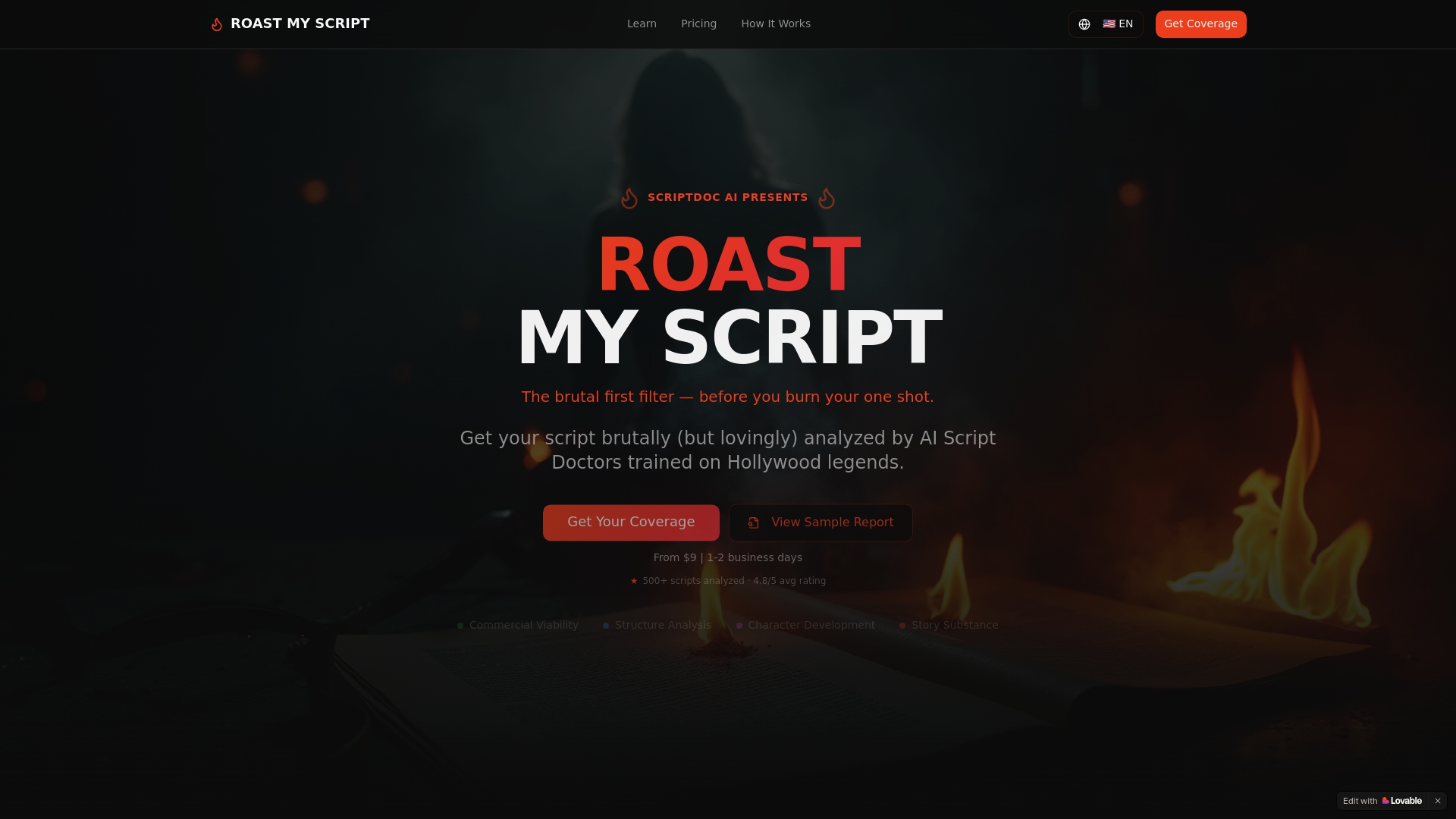
Roast My Script delivers affordable AI script coverage and analysis that examines your screenplay's structural integrity using proven Hollywood methodologies from Syd Field, Robert McKee, and Save the Cat. For $9 to $25, you receive detailed feedback within 1-2 days by email, identifying plot weaknesses, pacing problems, and structural inconsistencies that could derail your pitch. This brutal but constructive analysis acts as your filter before investing in expensive traditional coverage or script doctors.
The service doesn't replace human readers but provides the structural diagnosis you need to strengthen your screenplay before seeking professional representation. You'll discover whether your chosen plot framework actually serves your story or creates problems you've been too close to see. Enhance your storytelling craft with expert support that combines AI efficiency with industry-standard evaluation criteria, streamlining your script development process with proven tools that thousands of screenwriters trust.
Ready to put your plot structure to the test? Upload your screenplay today and get actionable feedback that transforms good ideas into market-ready scripts. For deeper structural guidance, revisit our story structure breakdown guide that complements your coverage with additional craft insights.
FAQ
What is the simplest plot structure for beginners?
The classic 3-Act structure is the easiest and most effective starting point for new screenwriters. It divides your story into three clear sections (setup, confrontation, resolution) with turning points at predictable intervals, providing a roadmap that prevents common beginner mistakes like sagging middles or unclear character arcs. Once you master this foundation, you can experiment with more complex frameworks.
Can AI replace screenwriters in plot development?
AI is a helpful ideation tool but not a replacement for human creativity and storytelling judgment. 78% of screenwriters use AI for plot and story ideas, yet AI lacks the nuanced understanding of character psychology, thematic depth, and emotional truth that defines great screenwriting. Screenwriters combine AI input with expert judgment and craft knowledge for best results.
How do I decide between linear and non-linear plot structures?
Linear plots suit genres like action and adventure where clarity and momentum drive audience engagement. Non-linear structures fit dramas exploring memory, trauma, or philosophical themes where chronological storytelling would diminish emotional impact. Consider your genre conventions, thematic goals, and whether timeline fragmentation serves your story's core meaning or simply adds unnecessary complexity.
How many plot points should a screenplay have?
Most screenplays include at least four major plot points: the inciting incident (around page 10 to 15), first act turning point (page 25 to 30), midpoint (page 55 to 60), and second act turning point (page 85 to 90). Beat sheets add more granular plot points for tighter structural control, but focus first on nailing these four essential beats that shape your story's dramatic arc and pacing.
Should I outline my entire plot before writing?
Outlining helps most writers avoid structural problems and wasted effort on scenes that don't serve the story. Create at least a basic beat sheet identifying your major plot points and character arc milestones before drafting pages. However, leave room for discovery during writing, as some of your best ideas will emerge organically when characters come alive on the page and surprise you with authentic choices.
Recommended
- Master Story Structure Breakdown for Screenwriters | ROAST MY SCRIPT
- The Character's "Spine" According to Linda Seger | ROAST MY SCRIPT
- Script format impact: 90% boost production & pitch success | ROAST MY SCRIPT
- Character Dimensionality in Narrative: A Strategic Masterclass on Linda Seger's Framework | ROAST MY SCRIPT
- Understanding Narrative Structure in Graphic Novels – The Mansion Press