
Screenplay structure isn't a creative straitjacket, it's your navigation system. Many writers resist it, thinking rules kill originality. The truth? Understanding story principles empowers both beginners and veterans to craft compelling narratives that connect emotionally while maintaining professional standards. This guide breaks down essential screenplay structures with real examples to strengthen your writing before you pitch.
Table of Contents
- Understanding The Three-Act Structure: Foundation And Function
- Exploring Non-Linear And Alternative Structures In Modern Screenplays
- Utilizing Beat Sheets And Two-Line Architectures For Clearer Storytelling
- Common Pitfalls And Expert Strategies For Enhancing Screenplay Structure
- Enhance Your Screenplay Structure With Professional Feedback
Key takeaways
| Point | Details |
|---|---|
| Three-act structure mirrors natural story progression | Setup, confrontation, and resolution reflect how humans experience complete narratives. |
| Non-linear formats boost engagement when used purposefully | Can increase viewer retention by 20% but requires clear thematic reasoning to avoid confusion. |
| Beat sheets reduce writer's block significantly | Organizing key story moments stepwise improves completion rates and narrative cohesion. |
| Dual storylines create deeper character development | External plot plus internal growth arcs resolved together strengthen emotional impact. |
Understanding the three-act structure: foundation and function
The three-act structure reflects natural story progression from beginning through middle to end. It originates from Aristotle's observations about dramatic storytelling, later refined by Syd Field's influential 1979 book that became mandatory reading in film schools worldwide. This framework provides the backbone for most successful Hollywood screenplays because it matches how audiences psychologically process complete narratives.
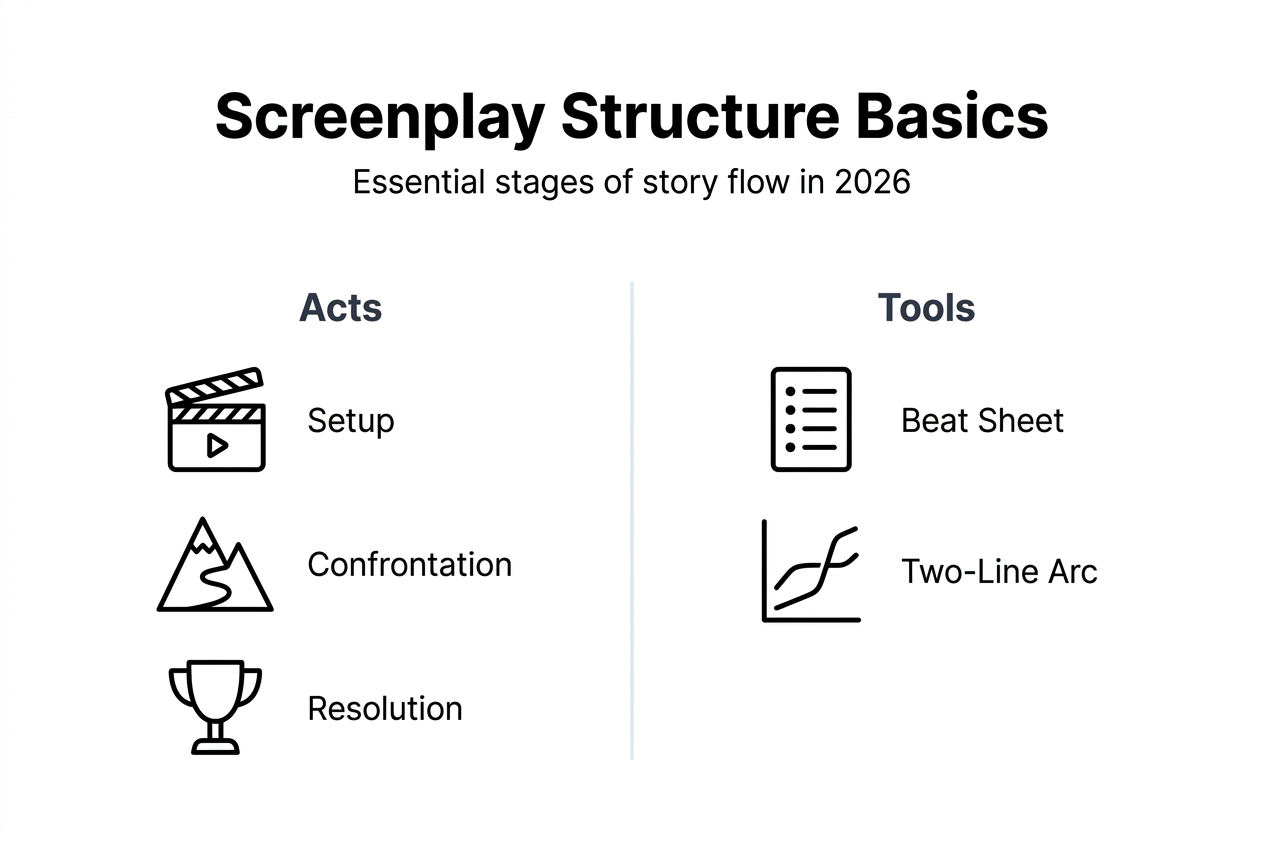
Each act serves a specific function. Act I establishes your protagonist's ordinary world, introduces the central conflict, and ends with a catalyst that forces change. Act II, the longest section, shows your character confronting obstacles while stakes escalate toward a crisis point. Act III delivers resolution through climactic confrontation and shows the transformed world afterward.
The three acts break down as:
- Act I (Setup): Introduce protagonist, establish stakes, present inciting incident
- Act II (Confrontation): Escalate conflict, develop subplots, build to midpoint reversal
- Act III (Resolution): Deliver climax, resolve character arcs, show new equilibrium
This structure closely mirrors natural life story cycles. We experience beginnings, struggle through challenges, and reach conclusions constantly. Field popularized breaking a 120-page script into roughly 30/60/30 page divisions, though modern screenplays vary these proportions based on genre and pacing needs.
"Structure is not a constraint but a container that allows creativity to flourish with purpose."
The beauty lies in flexibility. While the framework remains constant, your unique characters and thematic spine determine how you execute each beat. Romantic comedies hit different emotional notes than thrillers, yet both benefit from this foundational architecture.
Exploring non-linear and alternative structures in modern screenplays
Non-linear structures manipulate time and causality to create distinctive viewing experiences. Instead of chronological progression, these narratives fragment sequences, use flashbacks extensively, or present events from multiple perspectives simultaneously. Quentin Tarantino's Pulp Fiction remains the gold standard, demonstrating how non-linear storytelling enhances thematic depth when executed with clear artistic purpose.

Research shows non-linear formats can boost engagement by 20% in specific contexts. The fragmented structure creates mystery, encourages active viewing, and allows thematic connections across disparate storylines. However, this approach demands exceptional skill because audiences still need emotional coherence despite chronological disruption.
When considering non-linear structure:
- Identify why reordering events serves your theme better than linear progression
- Ensure each timeline shift reveals new information or deepens character understanding
- Maintain clear visual or dialogue cues so viewers track temporal relationships
- Test whether your story loses impact if told chronologically
Pulp Fiction works because its circular structure reinforces themes about fate and redemption. The famous diner scene bookends the narrative, creating closure while subverting expectations. Each vignette functions independently yet contributes to larger moral questions about violence and consequence.
Pro Tip: Map your non-linear screenplay chronologically first, then identify strategic reordering points that maximize suspense or thematic revelation.
Dialogue-driven scenes become crucial in non-linear narratives. Without chronological anchors, character voice and conversational content guide viewers through temporal jumps. Tarantino's extended dialogues about hamburgers or foot massages establish personality while providing breathing room between intense sequences.
"Non-linear structure without thematic justification creates confusion masquerading as sophistication."
The risk? Alienating audiences who can't follow your timeline gymnastics. Unless reordering events genuinely enhances understanding or emotional impact, stick with linear progression. Experimentation should serve story, not showcase cleverness.
Utilizing beat sheets and two-line architectures for clearer storytelling
Beat sheets provide stepwise roadmaps through your narrative, breaking stories into 12-15 essential moments that ensure proper pacing and emotional progression. The Save the Cat method popularized this approach, offering writers concrete checkpoints from "opening image" through "final image" that prevent sagging middles and rushed endings. Beat sheets reduce writer's block by transforming overwhelming blank pages into manageable sequential tasks.
These tools particularly help organize complex narratives. Instead of improvising through 110 pages hoping magic happens, you pre-plan crucial turning points. Where does your protagonist experience their lowest moment? When do allies become enemies? Beat sheets force you to answer these questions before investing months in a flawed structure.
Common beat sheet checkpoints include:
- Opening image establishing tone and world
- Catalyst disrupting ordinary life
- Debate showing protagonist's resistance to change
- Break into Act II committing to new journey
- Midpoint raising stakes through false victory or defeat
- All is lost moment before final push
- Climax delivering maximum conflict
- Resolution showing transformed reality
Two-line architecture addresses simultaneous external and internal story arcs running parallel throughout your screenplay. Good Will Hunting demonstrates this beautifully, balancing Will's external journey navigating academic opportunities against his internal struggle accepting intimacy and self-worth. Both storylines escalate independently yet resolve together in the climax.
| Story Element | External Line | Internal Line |
|---|---|---|
| Conflict | Career choice and intellectual validation | Fear of vulnerability and abandonment |
| Opposition | Professors, job offers, class barriers | Emotional walls, past trauma |
| Resolution | Choosing love over academic prestige | Opening heart to genuine connection |
This dual structure creates depth. Pure action movies feel hollow without character growth. Pure character studies bore without external stakes. Masterful screenplays weave both threads so tightly that resolving one requires addressing the other.
Pro Tip: Design your screenplay's climax to simultaneously resolve external plot and internal character transformation for maximum emotional payoff.
The story structure breakdown becomes clearer when you can identify these parallel progressions. Will's decision to drive to California represents both external action (leaving MIT opportunity) and internal growth (choosing emotional risk over safety). That convergence creates the satisfying ending audiences crave.
Beat sheets also improve collaboration. When working with producers or getting coverage, having clear structural markers helps everyone discuss pacing and narrative flow using shared terminology. "The midpoint feels weak" becomes actionable feedback rather than vague criticism.
Common pitfalls and expert strategies for enhancing screenplay structure
Overcomplicating structure without thematic justification ranks among the most frequent mistakes. Writers encounter non-linear masterpieces like Memento and assume fragmented timelines automatically equal sophistication. Over-reliance on non-linear formats without clarity confuses audiences and undermines emotional investment. Structure should illuminate your story, not obscure it behind puzzle-box mechanics.
Another trap involves rigidly following beat sheet formulas without understanding their purpose. Hitting every Save the Cat checkpoint mechanically creates paint-by-numbers screenplays lacking organic flow. Use structural frameworks as guides, not gospel. Your specific story determines whether the midpoint arrives on page 55 or page 62.
Critical structural mistakes to avoid:
- Introducing your protagonist's core motivation too late in Act I
- Failing to escalate stakes consistently through Act II
- Resolving conflicts through coincidence rather than character choice
- Neglecting the protagonist's emotional transformation arc
- Confusing complexity with depth through unnecessary timeline manipulation
Understanding protagonist catalyst moments proves essential. Your main character must drive the story through active decisions, not passive reaction to external events. Weak scripts have things happening to protagonists; strong scripts show protagonists making difficult choices that create consequences. That agency keeps audiences invested.
Pro Tip: Audit every major plot turn to verify it results from your protagonist's decision, not convenient coincidence.
The best script notes emphasize finding the irreducible human story beneath plot complexities. Good Will Hunting could have focused purely on mathematical genius drama. Instead, it centers on a damaged young man learning to accept love. That emotional core makes the structural choices meaningful.
"Structure serves emotion. When you lose sight of your protagonist's heart, no amount of clever plotting saves the screenplay."
Expert screenwriters focus relentlessly on how structure amplifies character vulnerability and growth. Each act break should leave your protagonist more exposed, with higher personal stakes. Act I might threaten their job; Act II should threaten their identity; Act III must force them to risk everything they've protected.
The script development process benefits enormously from structural awareness during rewrites. First drafts discover your story; subsequent drafts refine structure to maximize impact. Knowing whether your midpoint delivers sufficient reversal or your climax truly tests your protagonist's growth helps target revisions effectively.
Finally, remember that genre conventions inform but don't dictate structure. Horror films frontload scares differently than mysteries reveal clues. Study successful scripts in your target genre to understand audience expectations, then decide where to honor or subvert those patterns strategically.
Enhance your screenplay structure with professional feedback
Mastering screenplay structure takes your script from amateur to professional, but objective analysis reveals blind spots you can't see alone. You've invested weeks or months crafting your narrative, making it nearly impossible to evaluate structural weaknesses objectively. Professional coverage identifies whether your catalyst arrives too late, your midpoint lacks punch, or your resolution feels rushed before you submit to contests or producers.

AI script coverage and analysis delivers affordable professional feedback in 1-2 days by email, helping you refine structure before investing in expensive script consultants or risking rejection from industry contacts. Our analysis examines your three-act progression, character arc integration, and pacing against proven Hollywood frameworks, providing actionable notes that strengthen market readiness. Get the brutal structural honesty your screenplay needs to compete at professional levels without the $400 traditional coverage price tag.
FAQ
What is the three-act structure in screenplay writing?
The three-act structure divides your story into setup, confrontation, and resolution phases that mirror natural narrative progression. It originates from Aristotle's dramatic theory and provides the foundational framework for most successful Hollywood screenplays.
How does a non-linear screenplay affect storytelling?
Non-linear structures reorder chronological events to enhance suspense, reveal character depth, or strengthen thematic connections across storylines. This approach can boost engagement by 20% when executed with clear artistic purpose, but risks confusing audiences if timeline jumps lack justification.
What is a beat sheet and why use it?
A beat sheet outlines 12-15 essential story moments sequentially from opening image through final resolution, providing a roadmap before you write full scenes. This tool reduces writer's block significantly by breaking overwhelming blank pages into manageable structural checkpoints that ensure proper pacing.
What are common screenplay structure mistakes to avoid?
Overcomplicating structure through unnecessary non-linear elements confuses viewers without adding value, while ignoring your protagonist's emotional transformation arc weakens audience investment. Always ensure structural choices serve character development and theme rather than showcasing technical cleverness.
Recommended
- Master Story Structure Breakdown for Screenwriters | ROAST MY SCRIPT
- Script Development Process: Preparing for Hollywood Success | ROAST MY SCRIPT
- Script format impact: 90% boost production & pitch success | ROAST MY SCRIPT
- Character Dimensionality in Narrative: A Strategic Masterclass on Linda Seger's Framework | ROAST MY SCRIPT
- Guide to Cinematic Wedding Storytelling for Timeless Memories | Cinevisualstudios Blog