
You finished your screenplay after months of rewrites, but how do you know if it's ready for Hollywood? Scripts revised using professional script reader feedback advance to production or festivals 40% more often than unreviewed drafts. Script readers bridge the gap between your vision and industry standards, offering structured analysis that exposes blind spots before you pitch. This guide explains what script readers do, how they evaluate screenplays, and how to leverage their feedback for maximum impact.
Table of Contents
- Introduction To Script Readers
- Core Screenplay Analysis Methodologies Used By Script Readers
- Human Vs. Ai Script Readers: Benefits And Limitations
- Common Misconceptions About Script Readers
- How Script Readers Improve Market Viability And Success
- Practical Tips: Using Script Reader Feedback Effectively
- Discover Affordable Ai-Powered Script Feedback
- Frequently Asked Questions
Key takeaways
| Point | Details |
|---|---|
| Script readers provide structured, affordable feedback | They evaluate concept, structure, character, dialogue, and market fit using proven Hollywood methodologies. |
| Core analysis frameworks guide evaluations | Syd Field's three-act structure, Robert McKee's story principles, and Save the Cat beat sheets form the foundation. |
| AI and human readers serve different needs | AI offers fast, affordable baseline analysis while humans provide nuanced thematic and character insights. |
| Professional feedback boosts market viability | Detailed coverage identifies common rejection causes like pacing issues or structural weaknesses early. |
| Effective feedback use maximizes script improvement | Prioritize notes by impact, combine AI and human coverage strategically, and treat readers as developmental partners. |
Introduction to script readers
A script reader is a professional screenplay evaluator who analyzes scripts for structure, character development, dialogue quality, pacing, and commercial viability. They provide written coverage reports that identify strengths, weaknesses, and actionable improvement areas. Scripts revised using professional script reader feedback are 40% more likely to progress to production or festivals, making them essential allies for serious screenwriters.
Script readers serve multiple functions in the industry feedback ecosystem. They help production companies filter submissions, assist writers in identifying structural problems before expensive rewrites, and provide objective assessments that prepare scripts for pitching. Their reports typically include a logline evaluation, premise assessment, act-by-act breakdown, character analysis, dialogue critique, and market potential rating.
Without professional script readers, most screenwriters face several challenges:
- Blind spots in their own work that prevent objective evaluation
- Lack of industry-standard frameworks to measure screenplay quality
- Difficulty identifying which revision priorities will yield the highest impact
- Expensive trial and error through repeated rejections from producers or festivals
- Uncertainty about whether their script meets commercial expectations
Script readers fit between informal peer feedback and high-cost script doctors. Peer readers often lack industry training, while script doctors charge $500 to $1,500 for line-by-line consultation. Professional script readers occupy the sweet spot, delivering methodology-driven analysis at accessible price points from $9 to $400 depending on depth and format.
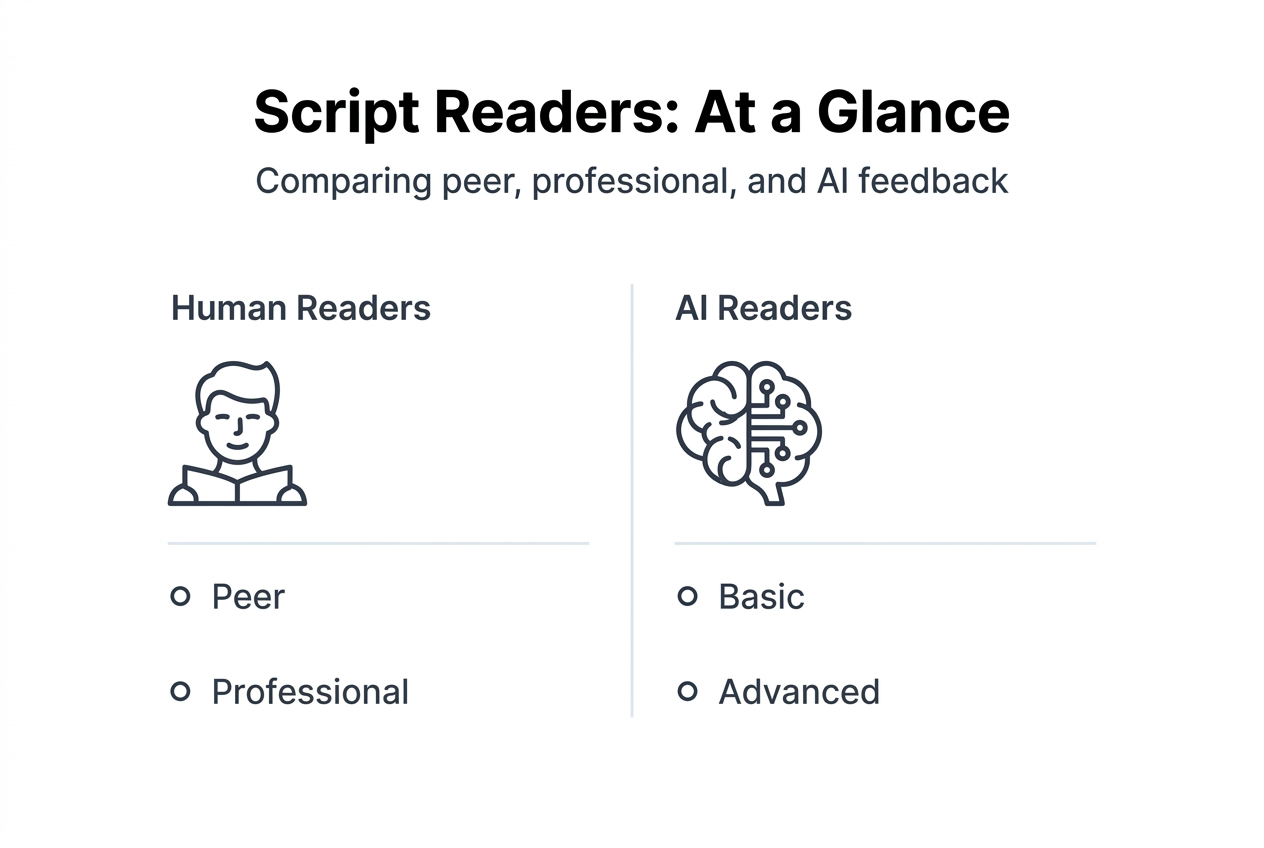
The advent of AI-powered script analysis has democratized access further. Emerging screenwriters can now receive fast, structured feedback based on established Hollywood frameworks without waiting weeks or spending hundreds of dollars. This accessibility shift allows more writers to refine their craft systematically before investing in human coverage or pitching to gatekeepers.
Core screenplay analysis methodologies used by script readers
Script readers rely on proven structural frameworks to evaluate screenplays objectively. Syd Field, Robert McKee, and Blake Snyder's methodologies form the foundation of professional script analysis. Understanding these paradigms helps you anticipate feedback and align your screenplay with industry expectations.
Syd Field's three-act paradigm divides screenplays into setup, confrontation, and resolution. The setup introduces characters, establishes the ordinary world, and ends with a catalyst around page 25 to 30. The confrontation spans roughly 50 pages, building tension through escalating obstacles and culminating in a crisis. The resolution delivers the climax and denouement in the final 25 pages. Script readers check if your plot points hit these structural markers and whether dramatic tension escalates appropriately.
Robert McKee's story structure principles emphasize inciting incidents, progressive complications, crisis decisions, and climactic actions. McKee focuses on character-driven causality where every scene must advance the protagonist's quest or deepen thematic exploration. Script readers trained in McKee's approach evaluate whether your scenes contain genuine conflict, whether character choices reveal internal values under pressure, and whether your story's design supports emotional resonance.
Blake Snyder's Save the Cat beat sheet breaks screenplays into 15 narrative beats with precise page ranges. Key beats include the opening image, theme stated, catalyst, debate, break into act two, B story, midpoint, all is lost, dark night of the soul, break into act three, and finale. This framework provides granular checkpoints that script readers use to assess pacing and structural integrity. Writers who internalize these beats often receive more specific, actionable feedback.
| Methodology | Primary Focus | Best For |
|---|---|---|
| Syd Field | Three-act turning points and act lengths | Macro structure and pacing issues |
| Robert McKee | Character causality and thematic depth | Complex character arcs and dramatic tension |
| Save the Cat | 15-beat structure with page-specific markers | Genre scripts and commercial pitches |
Script readers typically apply multiple methodologies simultaneously. They might check if your midpoint aligns with McKee's crisis principles while verifying it falls within Snyder's prescribed page range. This layered analysis ensures feedback addresses both structural mechanics and storytelling depth.
Pro Tip: Aligning your screenplay with these structures before submission increases feedback clarity and market potential. Study story structure breakdown to self-edit against these frameworks first.
Human vs. AI script readers: benefits and limitations
Choosing between human and AI script readers depends on your budget, timeline, and revision stage. Traditional script coverage fees average $60 to $400, while AI-based services start at $9 with turnaround under 2 days. Each option offers distinct strengths for different scenarios.
Cost and turnaround time differences are significant. Human readers typically require one to three weeks to deliver coverage, while AI tools generate reports within 1-2 days by email. For screenwriters on tight deadlines or limited budgets, AI provides immediate baseline feedback that identifies obvious structural problems without financial strain.
| Factor | Human Readers | AI Readers |
|---|---|---|
| Cost | $60 to $400 per script | $9 to $25 per script |
| Turnaround | 1 to 3 weeks | 1-2 days by email |
| Structural Analysis | Excellent | Excellent |
| Thematic Depth | Superior nuance | Methodology-driven |
| Character Insight | Complex psychological reading | Pattern recognition |
| Best Use | Final polish, complex themes | First pass, structural baseline |
Human readers excel at qualitative feedback on subtext, character psychology, and thematic resonance. They catch subtle tonal inconsistencies, identify when dialogue feels inauthentic despite technical correctness, and provide subjective reactions that mirror audience experience. For scripts with complex moral dilemmas, unreliable narrators, or experimental structures, human insight remains invaluable.
AI readers deliver consistent, methodology-driven analysis based on established paradigms. They excel at identifying structural deviations from Field, McKee, or Snyder frameworks, flagging pacing issues through act length calculations, and spotting repetitive dialogue patterns through linguistic analysis. AI script analysis techniques can cut feedback costs by 75% while maintaining structural rigor.
Ideal scenarios for AI feedback include:
- First draft structural assessments before investing in human coverage
- Budget-conscious writers needing multiple revision cycles
- Quick validation of screenplay title page formatting and logline effectiveness
- Genre scripts where commercial formula adherence matters most
Human readers provide superior insight when:
- Your script explores complex thematic territory requiring interpretive depth
- Character arcs involve subtle psychological transformation
- You need subjective emotional response data to gauge audience impact
- Final polish requires catching nuanced dialogue or tonal issues
Pro Tip: Use AI feedback as your first pass to address structural fundamentals, then invest in human coverage for deeper character and thematic revisions. This staged approach maximizes value while controlling costs.
External tools like EcomEye bulk AI comparison demonstrate how AI evaluation scales across multiple submissions, a strategy applicable to screenplay analysis for production companies reviewing high volumes.
Common misconceptions about script readers
Many screenwriters approach script readers with false expectations that undermine their ability to benefit from feedback. 68% of writers misunderstand script readers as gatekeepers rather than constructive allies. Correcting these misconceptions helps you engage with coverage more productively.
The most damaging misconception is that script readers exist only to judge and reject scripts. In reality, professional script readers serve a developmental, collaborative role. Their job is to identify what works, diagnose what doesn't, and suggest pathways to improvement. They want your screenplay to succeed because their reputation depends on providing actionable guidance that leads to better scripts.
Common false beliefs include:
- Script readers look for reasons to say no rather than opportunities to say yes
- Negative feedback means your script is unsalvageable
- Professional readers impose their personal taste rather than applying objective criteria
- Coverage is a one-time pass or fail verdict rather than a developmental tool
- Script readers lack the expertise to evaluate your unique vision
The reality surprises most first-time users. Professional script reader reports are typically detailed, constructive documents running 5 to 10 pages. They highlight specific strengths like compelling premises or authentic dialogue before addressing weaknesses. Their critiques reference established storytelling principles rather than subjective preferences, providing clear rationale for each note.
Understanding the true script reader intent transforms how you receive feedback. When a reader notes that your midpoint lacks a major reversal, they're applying Snyder's beat sheet framework, not attacking your creativity. When they flag passive protagonist behavior, they're referencing McKee's principle that character drives story through active choices under pressure.
Approach script readers as partners invested in your screenplay's improvement. Their outside perspective catches blind spots you can't see after months of revision. Their methodology-based analysis provides a roadmap for strategic rewrites rather than vague encouragement. By reframing coverage as collaborative development rather than judgment, you position yourself to extract maximum value from every note.
How script readers improve market viability and success
Professional script feedback directly impacts your screenplay's commercial prospects. Scripts revised using professional script reader feedback are 40% more likely to progress to production or festivals, demonstrating measurable returns on modest coverage investments.

Script readers improve market viability through several mechanisms. They identify genre and market fit early, preventing wasted effort pitching family comedies to horror producers or vice versa. Their structural analysis catches common rejection causes like sagging second acts, unclear protagonist goals, or unearned climaxes before your script reaches decision-makers. This preemptive quality control saves you from burning valuable industry contacts on unready material.
Detailed notes decrease submission rejection rates by addressing the top reasons scripts fail:
- Structural problems that undermine dramatic tension
- Passive protagonists who react rather than drive the story
- Dialogue that sounds unnatural or overly expository
- Pacing issues that lose reader attention in act two
- Unclear thematic throughlines that leave audiences confused about meaning
- Market positioning mismatches where tone or content doesn't fit target buyers
Script readers also calibrate your expectations realistically. If your thriller lacks sufficient twists to compete in a saturated market, coverage tells you before you spend money on festival submissions. If your character-driven drama requires a star attachment to secure financing, feedback prepares you to adjust your pitch strategy accordingly.
Market viability benefits achieved through script reader feedback include:
- Alignment with proven Hollywood screenplay structure that buyers expect
- Genre clarity that helps agents and managers position your script effectively
- Professional polish that signals you understand industry standards
- Competitive advantage through multiple revision cycles informed by expert analysis
- Confidence when pitching because you've addressed fundamental weaknesses
The 40% advancement rate for professionally reviewed scripts reflects compound advantages. Each coverage round catches additional issues, moving your screenplay closer to production-ready quality. Writers who treat script readers as ongoing developmental partners rather than one-time validators build stronger portfolios and industry reputations over time.
Practical tips: using script reader feedback effectively
Receiving script coverage is just the first step. How you interpret and apply feedback determines whether your revisions strengthen or dilute your screenplay. Follow these strategies to maximize the value of every script reader report.
Start by reading coverage twice before reacting. Your first read will trigger emotional responses to criticism. Set the report aside for 24 hours, then reread objectively to identify patterns and priorities. Look for notes that appear in multiple sections, these recurring themes signal fundamental issues requiring attention.
Prioritize feedback by impact and feasibility using this numbered approach:
- Address structural problems first since they affect every subsequent element
- Strengthen protagonist goals and motivations because passive characters undermine entire plots
- Revise scenes flagged for pacing or tension issues to maintain reader engagement
- Polish dialogue and description only after story mechanics function properly
- Fine-tune thematic elements and subtext in final passes once the narrative foundation is solid
Don't dismiss nuanced thematic or dialogue notes to avoid common rewrite failures. Many screenwriters eagerly fix plot holes but ignore feedback about character voice consistency or emotional authenticity. These subtler elements often determine whether readers connect emotionally with your story.
Pro Tip: Ignoring detailed script reader notes is common but reduces revision impact. Treat every note as a data point even if you ultimately decide not to implement specific suggestions.
Know when to seek additional human coverage or expert consultation. If AI feedback identifies structural issues you've addressed but you're uncertain about thematic depth or character psychology, invest in human coverage for that specialized insight. If multiple readers flag the same problem but suggest different solutions, consult a script doctor or writing group to explore options before committing to a revision path.
Frame feedback as a tool for strategic revision, not criticism of your talent. Professional script readers evaluate the current draft's effectiveness, not your worth as a writer. Every weakness they identify is an opportunity to strengthen your screenplay and develop craft skills that will benefit every future project.
Create a revision checklist from coverage notes organized by priority. Track which notes you've addressed, which require further consideration, and which you're consciously choosing to ignore with clear rationale. This systematic approach ensures you don't overlook critical feedback during the emotional roller coaster of rewriting.
Discover affordable AI-powered script feedback
Roast My Script delivers fast, professional screenplay analysis for screenwriters who need actionable feedback without breaking the bank. Our AI script coverage starting at $9 applies the same Syd Field, Robert McKee, and Save the Cat methodologies discussed throughout this guide, providing detailed structural reports in under 48 hours.
Whether you're polishing your first feature or refining a pilot before pitching, our platform identifies the structural weaknesses and market fit issues that cause rejections. Get the brutal, honest feedback you need to improve your screenplay before investing in expensive human coverage or burning industry contacts. Visit Roast My Script today to upload your script and receive the story structure breakdown that transforms good scripts into great ones.
Frequently asked questions
What does a script reader look for in a screenplay?
Script readers evaluate structure, characters, dialogue, pacing, and market fit as primary focus areas. They assess whether your screenplay follows proven storytelling frameworks, features compelling character arcs, maintains dramatic tension, and aligns with commercial genre expectations. Both storytelling quality and commercial viability factor into their recommendations.
How much does professional script reading cost?
Human script readers typically charge $60 to $400 per script depending on coverage depth and turnaround time. AI services offer feedback starting around $9 with faster delivery, usually within 1-2 days by email. Budget and timeline requirements should guide your choice between human and AI options.
Can AI script readers replace human feedback?
AI readers provide fast, affordable structural feedback based on established paradigms like Syd Field's three-act structure and Save the Cat beats. They excel at identifying plot holes, pacing issues, and formula deviations. However, they lack deep nuance on character psychology and thematic subtlety that experienced human readers provide. The best approach combines AI initial feedback with selective human coverage for complex character or thematic work.
How long does it take to receive script coverage?
Human script readers typically deliver coverage in one to three weeks depending on their workload and your deadline requirements. AI-powered services generate reports within 1-2 days by email after upload. Expedited human coverage options exist but cost significantly more, sometimes doubling standard rates for rush turnaround.